
Are heavy periods, pelvic pain, or frequent urination affecting your daily life? Have you been told that surgery is your only option for fibroids?
If these questions sound familiar, you are not alone. Millions of women silently live with uterine fibroids, believing that pain, heavy bleeding, and discomfort are a normal part of life. The good news is that every fibroid does not require surgery. With the right diagnosis, timely treatment, and an integrated approach, many women can effectively manage their symptoms, improve their quality of life, and support their body’s natural healing process. Understanding fibroids is the first step toward making informed decisions about your health.
What are Uterine Fibroids?
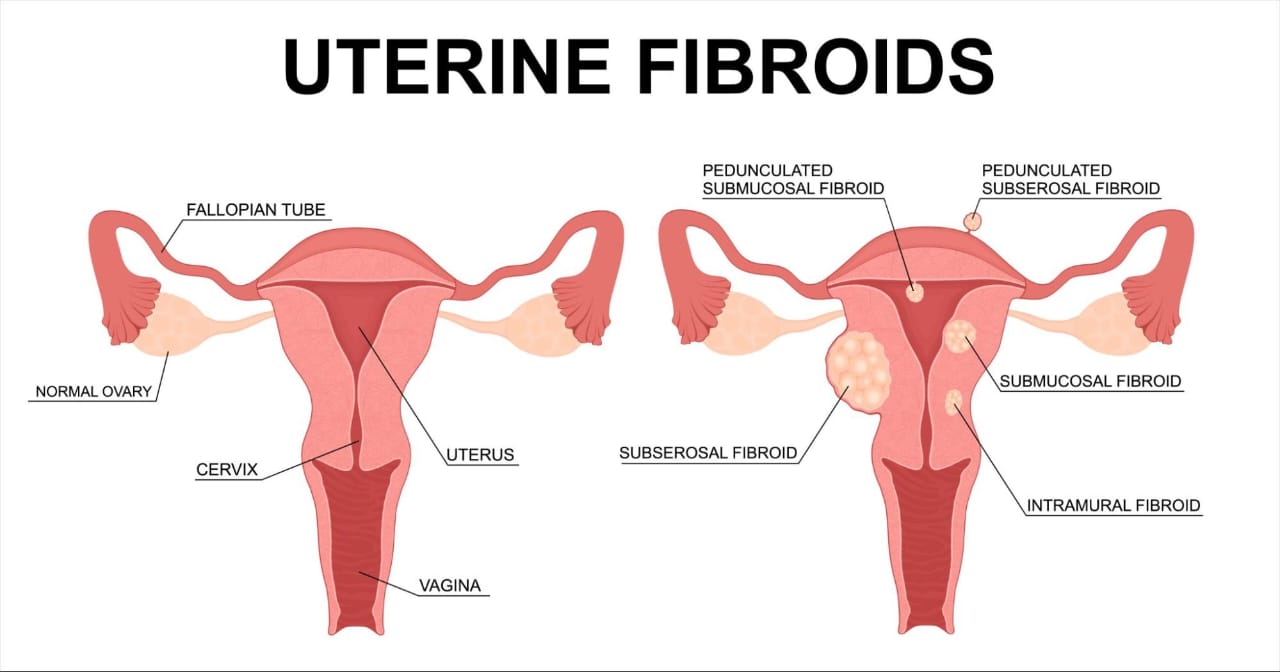
Uterine fibroids are non-cancerous (benign) growths that develop in the muscular wall of the uterus (womb).
- They are not cancer.
- They are made of muscle and fibrous tissue.
- They can be as small as a seed or as large as a melon.
- A woman may have one fibroid or multiple fibroids.
- Many women have fibroids without knowing it because they may not cause symptoms.
- Fibroids usually develop during the reproductive years (20–50 years).
Types of Uterine Fibroids :
1. Intramural Fibroid (Most Common)
- Grows within the muscular wall of the uterus.
- May cause heavy periods and pelvic pain.
- Usually responds well when treated early.
2. Submucosal Fibroid
- Grows inside the uterine cavity.
- Even a small fibroid can cause heavy bleeding and fertility problems.
3. Subserosal Fibroid
- Grows on the outer surface of the uterus.
- May press on nearby organs causing urinary or bowel symptoms.
4. Pedunculated Fibroid
- Attached to the uterus by a thin stalk.
- Can sometimes twist and cause sudden severe pain.
Which Type is Most Common?
intramural fibroids are the most common type. When diagnosed early and depending on their size, symptoms, and individual case, they often respond well to a well-planned integrated treatment approach.
Causes of Uterine Fibroids :
The exact cause is not fully understood, but the following factors increase the risk:
- Hormonal imbalance (Estrogen & Progesterone)
- Family history
- Delayed pregnancy
- Obesity or excess body weight
- Vitamin D deficiency
- Chronic stress
- Poor dietary habits
- Lack of physical activity
- Early onset of menstruation
- Insulin resistance and metabolic imbalance
Signs and Symptoms of Uterine Fibroids :
The symptoms of uterine fibroids depend on their size, number, and location. Some women may not experience any symptoms, while others may have symptoms severe enough to affect their daily life.
1. Heavy Menstrual Bleeding (Menorrhagia)
Periods that last more than 7 days with large clots and frequent pad changes, sometimes leading to anemia.
2. Painful Menstrual Cramps (Dysmenorrhea)
Moderate to severe lower abdominal pain during periods that may spread to the back or thighs.
3. Pelvic Pain or Pressure
Constant heaviness or pressure in the lower abdomen that can increase with standing or activity.
4. Abdominal Enlargement or Bloating
Swollen lower abdomen that makes clothes feel tight and may feel like weight gain or pregnancy.
5. Frequent Urination
Increased urge to urinate, especially at night, due to pressure on the urinary bladder.
6. Constipation or Difficulty Passing Stool
Pressure on the rectum causing slow bowel movements, bloating and incomplete evacuation.
7. Lower Back Pain
Dull aching pain in the lower back that worsens after long periods of standing or sitting.
8. Pain During Sexual Intercourse (Dyspareunia)
Pain during intercourse depending on the fibroid location, affecting comfort and well-being.
9. Fatigue and Weakness
Tiredness, dizziness and weakness from blood loss and anemia, making daily activities exhausting.
10. Difficulty in Conceiving (Infertility)
Certain fibroids may interfere with implantation or alter the uterine cavity, but not all cause infertility.
11. Recurrent Miscarriage
Fibroids may increase the risk of repeated pregnancy loss depending on their size and location.
12. Pregnancy-Related Complications
Possible risks include preterm labour, abnormal fetal position, cesarean delivery and placental complications.
13. Leg Pain or Pelvic Nerve Pressure (Rare)
Very large fibroids may press on pelvic nerves and cause pain, tingling or numbness in the legs.
Remember: Many women have fibroids without any symptoms. Regular gynecological check-ups and ultrasound examinations help in early diagnosis.
Severity According to Symptoms :
1.Mild
- Small fibroids
- Mild cramps
- Slightly heavy periods
- No effect on daily activities
2. Moderate
- Heavy menstrual bleeding
- Pelvic discomfort
- Frequent urination
- Mild anemia
- Noticeable fatigue
3. Severe
- Very heavy bleeding with clots
- Severe pelvic pain
- Significant anemia
- Large abdominal swelling
- Fertility concerns
- Pressure on bladder or bowel
- Reduced quality of life
How Homoeopathy Can Help ?
Homoeopathy treats the individual rather than just the fibroid. An integrated homoeopathic approach may help to:
- Reduce heavy menstrual bleeding
- Relieve pelvic pain and cramps
- Improve hormonal balance
- Slow further progression in suitable cases
- Improve overall well-being
- Reduce recurrence tendency
- Support emotional health
- Improve quality of life naturally
Homoeopathic treatment is individualized. Medicine selection depends on the patient’s symptoms, constitution, and overall health.
Common Homoeopathic Medicines :
Note : Homoeopathic medicines should always be prescribed after an individual case evaluation by a qualified homoeopathic physician. The medicine depends on the patient’s symptoms, constitution, emotional state, and overall health—not just the fibroid itself.
1.Calcarea Carbonica
- Suitable for women who are overweight, sweat excessively, and tire easily.
- Heavy, prolonged menstrual bleeding with weakness.
- Useful when fibroids are associated with hormonal imbalance and slow metabolism.
2. Sepia Officinalis
- Marked bearing-down sensation, as if everything would come out of the pelvis.
- Pelvic congestion, irregular periods, irritability, and emotional exhaustion.
- Commonly prescribed in women with chronic uterine disorders.
3. Thuja Occidentalis
- Helpful in women with multiple fibroids and recurrent uterine growths.
- Suitable when hormonal imbalance and pelvic congestion are prominent.
- Often considered in patients with a history of recurrent benign growths.
4. Fraxinus Americana
- Traditionally used for enlarged uterus associated with fibroids.
- Helps relieve pelvic heaviness, dragging pain, and menstrual irregularities.
- Frequently considered in women with symptomatic uterine enlargement.
5. Sabina
- Indicated in profuse bright-red bleeding with large clots.
- Pain may extend from the lower abdomen to the back or thighs.
- Often considered when heavy bleeding is the main complaint.
6. Trillium Pendulum
- Useful in excessive uterine bleeding causing weakness and dizziness.
- Helps manage symptoms related to blood loss under professional supervision.
- Often selected when hemorrhage is accompanied by exhaustion.
7. Lachesis Mutus
- Symptoms often worsen before menstruation and improve once bleeding begins.
- Suitable for left-sided pelvic pain, pelvic congestion, and menopausal women.
- Emotional sensitivity and intolerance to tight clothing may also be present.
8. Belladonna
- Sudden onset of severe pelvic pain with congestion and throbbing.
- May be considered during acute painful episodes.
- Useful when pain is intense and comes on rapidly.
9. Pulsatilla Nigricans
- Suitable for women with delayed, irregular, or scanty menstrual cycles.
- Emotional sensitivity, mood changes, and hormonal fluctuations are often present.
- Frequently considered in younger women with mild hormonal imbalance.
10. Calcarea Fluorica
Traditionally considered for hard, fibrous tissue growths.
May be selected in long-standing fibroids with a firm consistency.
Often used constitutionally in chronic cases.
How Dietary Correction Helps ?
A balanced diet supports hormonal health, reduces inflammation, and helps maintain a healthy weight.
Do’s :
- Eat plenty of green leafy vegetables.
- Include seasonal fruits.
- Eat fibre-rich foods.
- Choose whole grains.
- Include iron-rich foods.
- Eat foods rich in Vitamin C.
- Drink adequate water.
- Maintain a healthy body weight.
- Include nuts and seeds in moderation.
- Consume protein-rich foods.
Don’ts :
- Avoid excessive sugar.
- Reduce processed foods.
- Avoid deep-fried foods.
- Limit red meat.
- Reduce refined flour products.
- Limit soft drinks.
- Reduce excessive caffeine.
- Avoid smoking and alcohol.
- Avoid overeating.
- Do not skip meals.
Lifestyle Corrections :
- Maintain an ideal body weight.
- Exercise regularly.
- Sleep for 7–8 hours.
- Manage stress effectively.
- Practice relaxation techniques.
- Avoid a sedentary lifestyle.
- Stay well hydrated.
- Follow up regularly with your doctor.
- Do not ignore abnormal bleeding.
Chakra Healing, Yoga & Exercise :
An integrated mind-body approach can help reduce stress, improve circulation, and enhance overall well-being.
Yoga Poses :
- Butterfly Pose (Baddha Konasana)
- Child’s Pose (Balasana)
- Cat-Cow Stretch
- Cobra Pose (Bhujangasana)
- Bridge Pose (Setu Bandhasana)
- Legs-Up-The-Wall Pose (Viparita Karani)
Gentle Exercise
- Brisk walking
- Stretching
- Pelvic floor exercises
- Light strength training
Chakra Healing
Stress management and guided chakra balancing practices may help improve emotional well-being, relaxation, and mind-body harmony as part of a holistic treatment plan.
How Our Integrated Treatment Plan at Advik Homoeopathy Clinic & Counselling Centre Helps ?
At Advik Homoeopathy Clinic & Counselling Centre, we believe that every woman is unique. Instead of focusing only on the fibroid, we understand the root cause, your symptoms, hormonal health, lifestyle, and emotional well-being to create a personalized treatment plan.
Our Integrated Treatment Plan includes:
- Individualized homoeopathic medicines
- SOS medicines for heavy bleeding and pain (when required)
- Detailed case analysis
- Diet and nutritional guidance
- Lifestyle modification
- Yoga recommendations
- Stress management
- Chakra healing sessions
- Counselling and emotional support
- Regular follow-up and treatment monitoring
- Personalized care according to your reports and symptoms
Our goal is to help you improve your quality of life naturally while providing compassionate, evidence-informed care tailored to your individual needs.
Conclusion :
Uterine fibroids are a common condition, but they do not have to control your life. Early diagnosis, proper medical evaluation, and a personalized integrated treatment approach can help manage symptoms effectively and improve overall well-being. At Advik Homoeopathy Clinic & Counselling Centre, we combine individualized homoeopathy with dietary guidance, lifestyle modification, yoga, chakra healing, and counselling to provide holistic support for every patient. If you are experiencing symptoms of fibroids, seek professional advice early and choose a treatment plan that is safe, comprehensive, and tailored to your unique needs.