
Are irregular periods, weight changes, acne, hair fall or mood fluctuations affecting your daily life? Do stress, poor sleep and a sedentary lifestyle seem to make your symptoms worse?
Female hormonal health is influenced by a complex interaction between the reproductive system, metabolism, thyroid function, stress, sleep, nutrition, physical activity and overall lifestyle. Regular movement can support cardiovascular fitness, metabolic health, healthy body composition and emotional wellbeing. Yoga, breathing practices and meditation can complement an active lifestyle by encouraging flexibility, relaxation and stress management. For women experiencing hormonal symptoms, the goal should not simply be to “balance hormones”, but to understand the underlying cause and create an individualized plan that supports the whole body.
Why can hormonal imbalance occur in women?
Hormonal disturbances can have several possible causes, including:
- PCOS and irregular ovulation
- Thyroid disorders
- Insulin resistance and metabolic disturbances
- Excess weight or significant weight loss
- Chronic psychological stress
- Poor or irregular sleep
- Sedentary lifestyle
- Inadequate or unbalanced nutrition
- Excessive exercise with inadequate recovery
- Perimenopause and menopause
- Certain medications
- Disorders involving the ovaries, adrenal glands, pituitary gland or other endocrine organs
Common symptoms
It may includes:
- irregular periods
- heavy or painful periods
- acne
- unwanted facial hair
- hair fall
- weight changes
- fatigue
- mood changes
- sleep disturbances and difficulty conceiving.
However, these symptoms are not specific to one condition. Persistent or significant symptoms should be medically evaluated rather than automatically attributed to “hormonal imbalance.”
The role of yoga in female hormonal health :
Yoga can be a valuable part of a healthy lifestyle. Its benefits may come through a combination of physical movement, flexibility, breathing, relaxation, mindfulness and improved body awareness.
Yoga should be considered supportive care and not a substitute for diagnosis or treatment of an underlying medical condition.
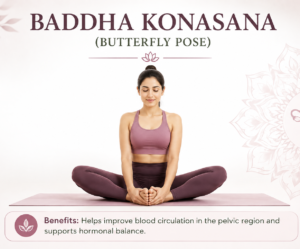
- Baddha Konasana – Butterfly Pose
How to do it:
- Sit upright with your legs extended.
- Bend your knees and bring the soles of your feet together.
- Hold your feet gently.
- Allow the knees to move naturally towards the floor.
- Keep your spine comfortable and upright.
- Breathe slowly and comfortably.
Duration:
- Hold for 20–30 seconds.
- Repeat 2–3 times.
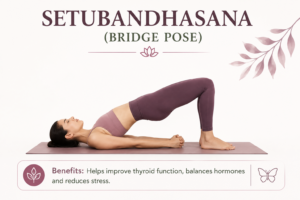
- Setu Bandhasana – Bridge Pose
How to do it:
- Lie comfortably on your back.
- Bend your knees and keep your feet flat on the floor.
- Keep your feet approximately hip-width apart.
- Place your arms beside your body.
- Gently lift your pelvis while pressing through your feet.
- Hold briefly and slowly lower down.
Repetitions:
- 8–12 repetitions.
- 2 sets.
- Hold the final repetition for 15–30 seconds if comfortable.
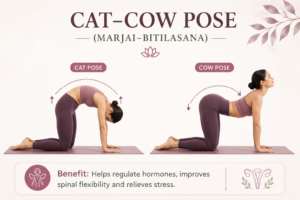
- Marjaryasana–Bitilasana – Cat-Cow
How to do it:
- Come onto your hands and knees.
- Keep wrists approximately beneath the shoulders.
- Keep knees beneath the hips.
- Inhale and gently extend the spine.
- Exhale and gently round the spine.
- Coordinate the movement with slow breathing.
Repetitions:
- 8–12 cycles.
- Perform 1–2 sets.
- Bhujangasana – Cobra Pose 🌱
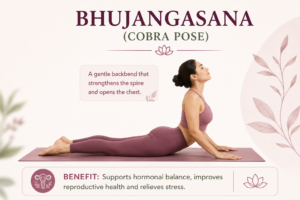
How to do it:
- Lie on your abdomen.
- Place your palms near the chest.
- Keep the elbows close to the body.
- Gently lift the upper chest.
- Avoid forcing the lower back.
- Keep shoulders relaxed.
Duration:
- Hold for 10–20 seconds.
- Repeat 2–3 times.
- Malasana – Garland Pose 🌸
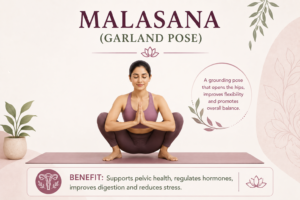
How to do it:
- Stand with your feet comfortably apart.
- Slowly lower into a squat according to your mobility.
- Keep the knees tracking in the direction of the toes.
- Bring your hands together if comfortable.
- Keep your spine as upright as possible.
Repetitions:
- Hold for 15–30 seconds.
- Repeat 2–3 times.
Modification:
Use a support or chair if a deep squat is uncomfortable.
- Supta Baddha Konasana – Reclining Butterfly 🧘♀️
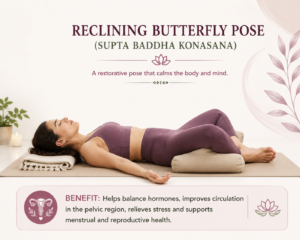
How to do it:
- Lie on your back.
- Bring the soles of your feet together.
- Allow the knees to open comfortably.
- Place cushions beneath the knees if necessary.
- Relax the shoulders and breathe slowly.
Duration:
- 2–5 minutes.
- Balasana – Child’s Pose 🌿
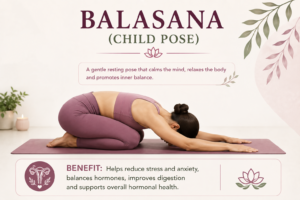
How to do it:
- Kneel comfortably.
- Sit back towards your heels.
- Extend your arms forward or keep them beside the body.
- Rest your forehead on the mat or a cushion.
- Breathe slowly.
Duration:
- 30–60 seconds.
- Repeat 2–3 times.
- Viparita Karani – Legs-Up-the-Wall Pose
How to do it:
- Sit sideways close to a wall.
- Gently lie back while bringing your legs up the wall.
- Keep your body relaxed.
- Breathe naturally.
Duration:
- 3–5 minutes.
- Gradually increase according to comfort.
————————————
Exercise for female hormonal health
Yoga should not be the only form of physical activity. A balanced programe should include aerobic activity, strength training, mobility and recovery.
WHO recommends adults undertake 150–300 minutes of moderate-intensity aerobic activity per week, along with muscle-strengthening activities involving major muscle groups on at least 2 days per week.
- Brisk Walking 🚶♀️
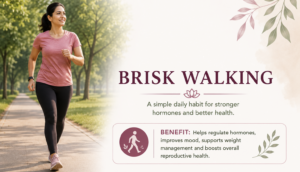
How to do it:
- Walk at a pace that increases your breathing and heart rate.
- You should still be able to speak comfortably.
- Maintain an upright posture.
- Start gradually if you are currently inactive.
Duration:
- 25–40 minutes.
- Aim for approximately 5 days/week as tolerated.
Regular aerobic exercise can also help some women experiencing PMS symptoms, including fatigue and low mood.
- Squats 🏋️♀️
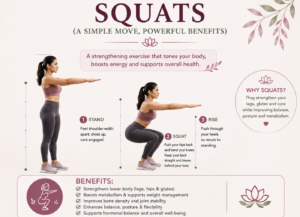
How to do it:
- Stand with feet approximately shoulder-width apart.
- Keep your chest comfortable and spine neutral.
- Bend your hips and knees as though sitting into a chair.
- Keep knees aligned with the direction of your feet.
- Return to standing slowly.
Repetitions:
- 10–15 repetitions.
- 2–3 sets.
- Glute Bridge
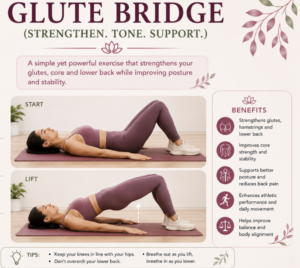
How to do it:
- Lie on your back with knees bent.
- Keep feet flat on the floor.
- Engage the gluteal muscles gently.
- Lift the hips.
- Pause briefly.
- Lower slowly.
Repetitions:
- 10–15 repetitions.
- 2–3 sets.
- Lunges
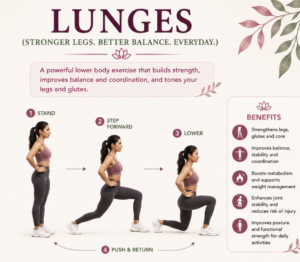
How to do it:
- Stand upright.
- Step one foot forward.
- Lower the body in a controlled manner.
- Keep the front knee aligned with the foot.
- Push through the front foot to return to standing.
- Alternate legs.
Repetitions:
- 8–12 repetitions per leg.
- 2 sets.
Potential benefits:
- Improves lower-body strength.
- Works the thighs and gluteal muscles.
- Improves functional movement.
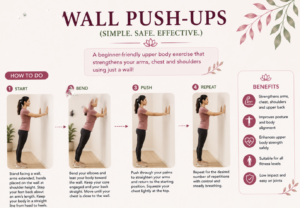
- Wall Push-Ups 💪
How to do it:
- Stand facing a wall.
- Place your palms at approximately shoulder height.
- Step slightly backwards.
- Bend the elbows and bring the chest towards the wall.
- Push back to the starting position.
Repetitions:
- 8–12 repetitions.
- 2–3 sets.
Potential benefits:
- Strengthens the chest, shoulders and arms.
- Suitable for beginners.
- Can be progressed gradually.
- Cycling / Swimming / Dancing ❤️
Duration:
- 20–40 minutes.
- 3–5 days per week depending on fitness and preference.
Potential benefits:
- Improves cardiovascular fitness.
- Increases overall physical activity.
- Supports metabolic health.
- Provides an enjoyable alternative to repetitive workouts.
The most effective exercise is often the one that a woman can perform consistently and safely.
————————————-
Pranayama and breathing practices 🌬️
Breathing practices can be incorporated into a wellness routine, particularly when stress and mental tension are prominent.
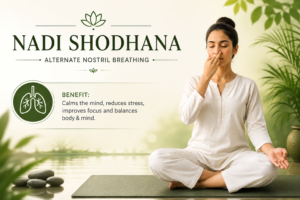
- Nadi Shodhana – Alternate Nostril Breathing
How to do it:
- Sit comfortably with the spine upright.
- Close one nostril gently.
- Breathe slowly through the other nostril.
- Alternate sides in a comfortable rhythm.
- Do not force the breath or hold it unnecessarily.
Duration:
- Start with 3–5 minutes.
- Gradually progress to 5–10 minutes.
Potential benefits:
- Encourages slow, controlled breathing.
- Promotes relaxation.
- Can become part of a daily stress-management routine.
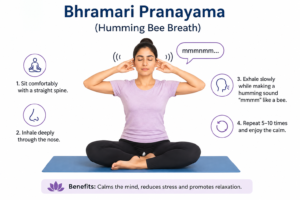
- Bhramari – Humming Bee Breath 🐝
How to do it:
- Sit comfortably.
- Take a gentle breath in.
- Exhale slowly while making a soft humming sound.
- Keep the sound comfortable and relaxed.
Repetitions:
- 5–10 rounds.
Potential benefits:
- Encourages slow breathing.
- Promotes relaxation.
- Can be particularly useful as part of an evening relaxation routine.
————————————
Meditation for hormonal wellness 🧘♀️
Stress does not mean that every hormonal problem is caused by stress. However, chronic stress can affect sleep, mood, eating patterns and overall wellbeing.
Mindfulness meditation can therefore be included as a supportive lifestyle practice.
How to practice:
- Sit or lie comfortably.
- Close your eyes.
- Bring attention to your natural breathing.
- Notice the movement of the breath.
- When thoughts arise, acknowledge them without judgement.
- Gently return your attention to breathing.
Duration:
- Start with 5 minutes daily.
- Gradually increase to 10–15 minutes.
Potential benefits:
- Encourages relaxation.
- Improves awareness of stress responses.
- Can support emotional wellbeing.
- May be useful as part of a broader stress-management routine.
————————————–
Yoga Nidra and deep relaxation 🌙
A short relaxation practice can be added after yoga or before bedtime.
How to practice:
- Lie comfortably on your back.
- Close your eyes.
- Relax the face, shoulders, abdomen, legs and feet.
- Observe your breathing without changing it.
- Gradually bring awareness through different parts of the body.
- Remain relaxed for 10–20 minutes.
Potential benefits:
- Encourages deep relaxation.
- Provides a structured period of mental rest.
- Can be incorporated into an evening wellness routine.
————————————–
A practical daily hormonal wellness routine 🌸
Morning:
- 5 minutes gentle breathing
- 15–20 minutes yoga asanas
- 20–30 minutes brisk walking or other aerobic activity
Evening:
- 5–10 minutes gentle stretching
- 5–10 minutes meditation or Nadi Shodhana
- 10 minutes relaxation or Yoga Nidra
On 2–3 days each week:
- Add strength training such as squats, lunges, glute bridges and push-ups.
The objective is not to perform every activity every day. The objective is to create a sustainable combination of movement, strength, flexibility, relaxation and recovery.
———————————-
How an integrated approach can support female hormonal health 🌿
Hormonal concerns are multifactorial. An individualized approach may combine:
- Medical assessment 🔎
- Understand the menstrual pattern.
- Identify associated symptoms.
- Assess possible metabolic, thyroid, reproductive or other contributing factors.
- Recommend investigations when clinically appropriate.
- Homoeopathic care 🌿
- Individualized homoeopathic treatment may be considered as a complementary component of care.
- Selection should be based on the individual clinical picture rather than simply prescribing for a diagnostic label.
- Response should be monitored regularly.
- Nutrition 🥗
- Emphasize balanced, nutrient-dense meals.
- Ensure adequate protein and dietary fibre.
- Include a variety of vegetables, fruits, whole grains, legumes and appropriate healthy fats.
- Individualize nutrition according to metabolic health, body composition and clinical needs.
- Yoga and asanas 🧘♀️
- Improve mobility and flexibility.
- Provide structured physical activity.
- Encourage body awareness and relaxation.
- Exercise 🏃♀️
- Include aerobic activity for cardiovascular and metabolic health.
- Include resistance training for muscle strength.
- Reduce prolonged sedentary time.
- Meditation and stress management 🌼
- Develop regular relaxation practices.
- Support emotional wellbeing.
- Encourage healthy sleep routines.
- Monitoring and follow-up 📋
- Track menstrual cycles.
- Monitor symptoms.
- Review lifestyle adherence.
- Assess relevant clinical parameters when indicated.
- Modify the plan according to individual response.
Together, medicine, yoga, exercise, and meditation help restore regular cycles, improve energy, skin, mood, and overall well-being.
Women with persistent irregular periods, very heavy bleeding, severe pelvic pain, infertility, sudden excessive hair growth, unexplained weight changes or other significant symptoms should seek appropriate medical evaluation.
Certain yoga poses and exercises may also need modification during pregnancy, after surgery, with significant pelvic pain, musculoskeletal problems or other medical conditions. The right exercise is the one that is appropriate for your health status, fitness level and current symptoms.
Final note from Dr. Greeva Mankad 🌸
“Your hormones are not isolated from the rest of your body.
Your sleep, nutrition, movement, stress, metabolism, emotional wellbeing and overall health are all interconnected. You do not need extreme workouts or complicated routines. You need the right approach, practiced consistently and adapted to your individual needs. Yoga can help you move. Exercise can help you become stronger. Meditation can help you slow down. Nutrition can help nourish your body. And appropriate medical care can help identify and address the underlying problem.
At Advik Homeopathy Clinic & Counselling Centre, our focus is not simply on a symptom or a hormone report. We aim to understand the woman as a whole and create an individualized, integrated approach to her health.
Because true hormonal wellness is not just about balancing hormones — it is about creating better health for the whole woman.”