
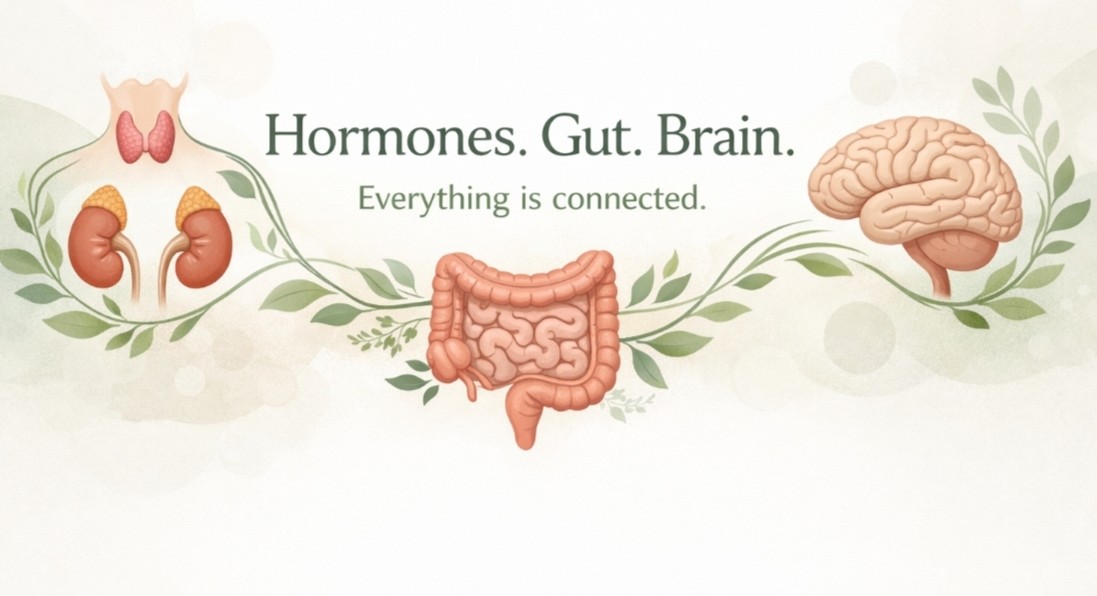
Your Gut & Hormones are deeply connected. This guide helps women understand the connection & take practical steps to support balance and wellbeing from within.
GUT HEALTH & HORMONE BALANCE GUIDE
A Practical Guide for Women
By Dr. Greeva Mankad
BHMS | MD (AM) | PGDPC | DNHE
Homeopathic Physician | Counsellor | Women’s Hormone Health Consultant
Dear Woman,
Many women come to my clinic saying:
“Doctor, mujhe PCOS bhi hai… aur pet ki problem bhi.”
or
“Periods bhi irregular hain… aur bloating, constipation aur acidity bhi rehti hai.”
One important observation from my practice is that many women with hormonal concerns also struggle with digestive complaints. While this does not mean every gut problem causes hormonal imbalance, the digestive system and hormones are closely connected and often influence each other.
This guide will help you understand that connection and share simple habits that support both gut and hormonal health.
How Are Gut Health and Hormones Connected?
Your gut is much more than a digestive organ.
It contributes to:
- Digestion and nutrient absorption
- Immune function
- Maintaining a healthy gut microbiome
- Supporting hormone metabolism
- Influencing inflammation
When gut health is disturbed, some women may experience digestive symptoms alongside hormonal complaints.
Could Your Gut Need More Attention?
If you often experience 3 or more of these symptoms, it may be worth discussing them with your healthcare provider:
☐ Bloating after meals
☐ Frequent acidity
☐ Constipation
☐ Loose motions occurring repeatedly
☐ Excessive gas
☐ Feeling heavy after eating
☐ Food intolerances
☐ Irregular periods
☐ PMS
☐ PCOS
☐ Acne
☐ Persistent fatigue
Common Signs That Should Not Be Ignored
Digestive symptoms that persist deserve proper evaluation, especially if they occur along with:
✔ Irregular menstrual cycles
✔ Severe PMS
✔ PCOS
✔ Endometriosis
✔ Adenomyosis
✔ Unexplained fatigue
✔ Skin concerns such as persistent acne
10 Daily Habits That Support Gut & Hormonal Health
- Eat Slowly
Digestion begins in the mouth.
Chew each bite thoroughly before swallowing.
- Include Protein in Every Main Meal
Examples:
✔ Dal
✔ Paneer
✔ Eggs (if consumed)
✔ Sprouts
✔ Greek yogurt or curd (if well tolerated)
Protein supports satiety and overall health.
- Increase Fibre Gradually
Choose a variety of:
🥗 Vegetables
🥒 Salads
🍎 Fruits
🌾 Whole grains
Increase fibre slowly and drink enough water to avoid discomfort.
- Stay Hydrated
Aim for adequate water intake throughout the day unless your doctor has advised otherwise.
Hydration supports normal bowel function.
- Feed Your Gut Microbiome
Depending on your tolerance and dietary pattern, include:
✔ Homemade curd
✔ Buttermilk
✔ Fermented foods such as idli or dosa
These foods can contribute to dietary diversity.
- Walk After Meals
A gentle 10–15 minute walk after lunch or dinner may help support digestion and blood sugar control.
- Sleep Before Midnight
Consistent sleep supports hormonal regulation and overall wellbeing.
Aim for 7–9 hours of sleep if possible.
- Manage Stress
Chronic stress can affect both digestion and hormonal balance.
Simple options include:
✔ Deep breathing
✔ Meditation
✔ Yoga
✔ Prayer
✔ Journaling
✔ Spending time in nature
- Limit Ultra-Processed Foods
Try to reduce frequent intake of:
❌ Sugary drinks
❌ Chips
❌ Packaged snacks
❌ Refined sweets
Instead, choose mostly whole foods.
- Move Every Day
Even 30 minutes of walking most days of the week supports overall metabolic and digestive health.
Foods That Many Women Tolerate Well
(Individual needs vary.)
🥗 Green leafy vegetables
🥕 Carrot
🥒 Cucumber
🍓 Berries
🍎 Apple
🥝 Kiwi
🍊 Citrus fruits
🌰 Nuts and seeds
🌾 Oats
🫘 Lentils
🫛 Beans
Foods That Some Women May Wish to Reduce
Tolerance differs from person to person.
If you notice symptoms after certain foods, discuss this with your healthcare provider.
Examples include:
- Highly processed foods
- Excess sugary drinks
- Deep-fried foods
- Excess alcohol (where applicable)
Avoid unnecessary restrictions unless medically advised.
Lifestyle Practices I Often Discuss With My Patients
✔ Eat meals at regular times.
✔ Avoid skipping breakfast if it doesn’t suit your routine.
✔ Avoid lying down immediately after meals.
✔ Spend time outdoors.
✔ Exercise regularly.
✔ Maintain a healthy body weight where appropriate.
When Should You See a Doctor?
Please seek medical evaluation if you experience:
🚨 Blood in stool
🚨 Persistent vomiting
🚨 Unintentional weight loss
🚨 Severe abdominal pain
🚨 Ongoing constipation or diarrhoea
🚨 Heavy menstrual bleeding
🚨 Severe pelvic pain
🚨 Irregular periods lasting several months
🚨 New symptoms that are worsening
My Integrated Clinical Approach
Every woman is unique.
This is why, in my practice, I do not focus only on a diagnosis.
I also understand:
✔ Your digestive pattern
✔ Hormonal symptoms
✔ Menstrual history
✔ Sleep
✔ Stress
✔ Emotional wellbeing
✔ Diet and lifestyle
✔ Individual symptom pattern
Based on this, I create an individualized integrated management plan, which may include homeopathic treatment where appropriate, together with diet, lifestyle guidance, counselling, and regular follow-up.
Final Message
Your hormones and your gut are part of the same body—they don’t work in isolation.
Supporting digestive health is one important piece of the bigger picture, but persistent symptoms should never be ignored.
With the right assessment and a personalized plan, many women can take meaningful steps toward better digestive and hormonal wellbeing.
To understand GERD in more detail click here.
About Dr. Greeva Mankad
Dr. Greeva Mankad
BHMS | MD (AM) | PGDPC | DNHE
🌸 Homeopathic Physician
🌸 Women’s Hormone Health Consultant
🌸 Counsellor | CBT & NLP Practitioner
🌸 Reiki Energy Medicine Practitioner
📍 Advik Homeopathy Clinic & Counselling Centre
South Bopal, Ahmedabad
📞 Appointment: 9512513970
🌐 Website:
www.advikclinic.com
🌿 Exclusive Bonus: 7-Day Gut Reset Challenge
For the next 7 days, try to complete these simple habits:
☐ Drink enough water every day.
☐ Include one bowl of seasonal vegetables.
☐ Eat one protein-rich meal.
☐ Walk for 15 minutes after dinner.
☐ Sleep before 11 PM.
☐ Practice 5 minutes of deep breathing.
☐ Avoid sugary drinks for the day.
At the end of the week, notice:
- Is bloating reduced?
- Are bowel movements more regular?
- Do you feel lighter after meals?
- Has your energy improved?
Small, consistent changes often make a meaningful difference over time.