
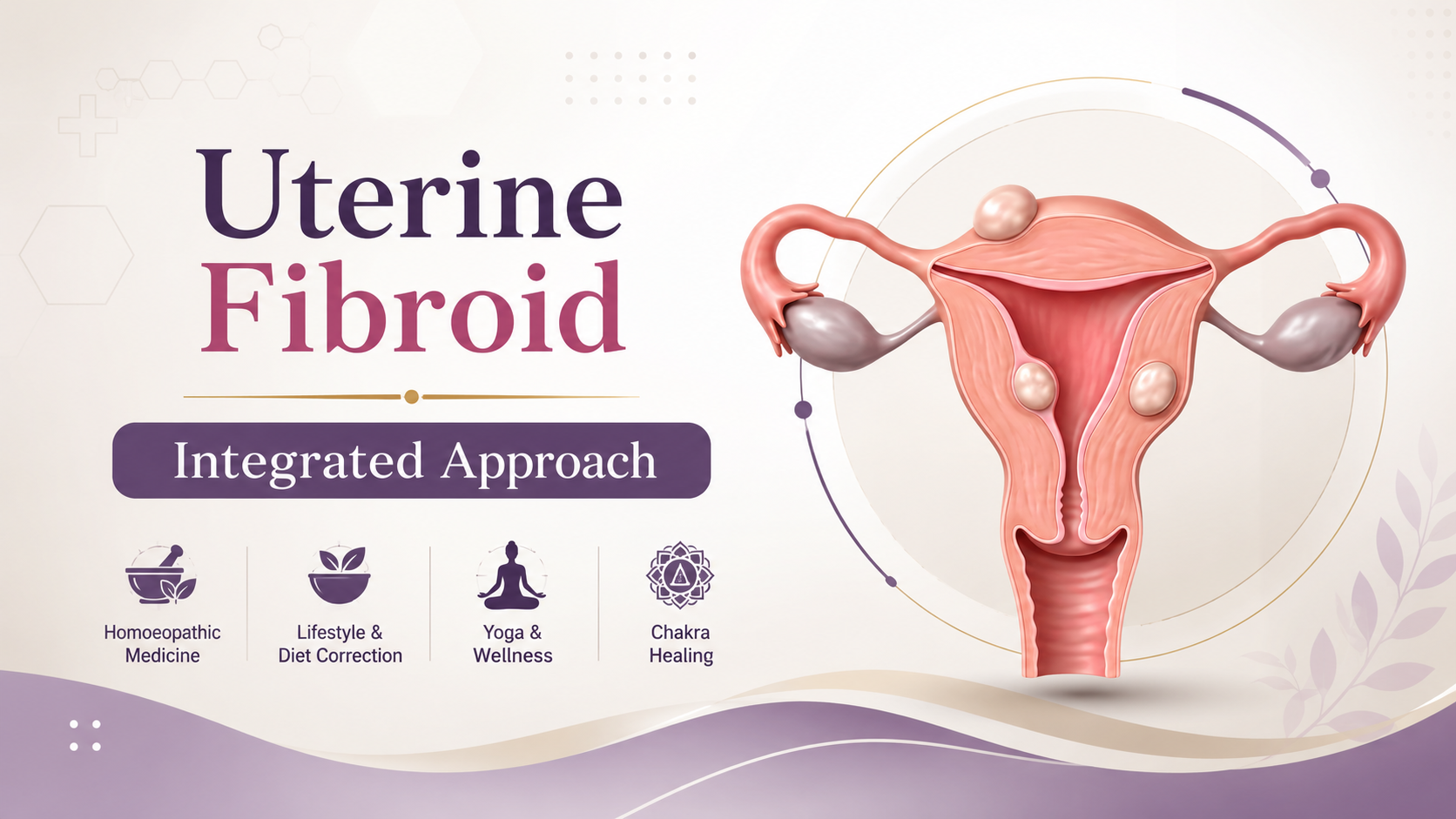
Will fibroids keep growing? Will I need surgery? Can I still have a healthy pregnancy?
If these questions are on your mind, you’re not alone. A fibroid diagnosis can feel overwhelming, but the truth is: not every fibroid needs surgery. This complete guide helps you understand what fibroids really are, how they affect your body, and how an integrated approach of homeopathy, nutrition, lifestyle, and emotional support can help you manage symptoms, protect your quality of life, and make confident decisions about your health.
THE COMPLETE FIBROID CARE BLUEPRINT
A Practical Guide for Women with Uterine Fibroids
By
Dr. Greeva Mankad
BHMS | MD (AM) | PGDPC | DNHE
Women’s Hormone Health Consultant
Advik Homeopathy Clinic & Counselling Centre
Dear Woman,
If you have recently been diagnosed with fibroids…
You may have many questions.
“Will they keep growing?”
“Will I need surgery?”
“Will my bleeding ever reduce?”
“Can I still plan a pregnancy?”
These concerns are understandable.
The good news is that not every fibroid needs surgery, and management depends on several factors including your symptoms, the size and location of the fibroid, your age, and your reproductive plans.
The goal is not just to treat a scan report—it is to improve your quality of life.
What Are Fibroids?
Fibroids (uterine leiomyomas) are non-cancerous growths that develop from the muscle layer of the uterus.
Many women have fibroids without any symptoms, while others experience:
- Heavy menstrual bleeding
- Painful periods
- Pelvic pressure
- Frequent urination
- Constipation
- Back pain
- Fatigue from iron deficiency
- Difficulty conceiving (depending on the fibroid’s size and location)
Do All Fibroids Need Surgery?
No.
Management depends on:
✔ Your symptoms
✔ Fibroid size
✔ Number of fibroids
✔ Location
✔ Future pregnancy plans
✔ Growth over time
✔ Overall health
Regular follow-up with your gynecologist is important.
Common Symptoms
✔ Heavy bleeding
✔ Passing clots
✔ Long periods
✔ Pelvic heaviness
✔ Frequent urination
✔ Lower back pain
✔ Pain during intercourse
✔ Bloating
✔ Fatigue
My Integrated Assessment
In my practice, I don’t focus only on the ultrasound report.
I also understand:
✔ Menstrual history
✔ Bleeding pattern
✔ Pain pattern
✔ Emotional wellbeing
✔ Sleep
✔ Stress
✔ Diet
✔ Gut health
✔ Lifestyle
✔ Individual symptom pattern
Based on this, I create an individualized integrated management plan.
Nutrition That Supports Overall Health
While no specific diet has been proven to shrink fibroids, a nutritious eating pattern supports overall wellbeing.
Aim to include:
🥬 Green leafy vegetables
🥕 Colorful vegetables
🍎 Fruits
🫘 Lentils and beans
🥜 Nuts and seeds
🥚 Protein-rich foods (if consumed)
🌾 Whole grains
Healthy eating also supports energy levels, especially if heavy bleeding has led to iron deficiency.
If You Have Heavy Bleeding
Discuss iron status with your doctor.
Iron-rich foods include:
✔ Spinach
✔ Lentils
✔ Chickpeas
✔ Beans
✔ Pumpkin seeds
✔ Sesame seeds
✔ Lean meats (if consumed)
Pair plant-based iron sources with vitamin C-rich foods (such as lemon or oranges) to improve iron absorption.
Foods to Limit
Try to reduce frequent intake of:
❌ Ultra-processed foods
❌ Sugary drinks
❌ Excess refined sweets
❌ Frequent deep-fried foods
Aim for a balanced diet rather than strict restrictions.
Lifestyle Habits
Sleep
7–9 hours daily
Exercise
At least 150 minutes of moderate activity each week, as advised by your healthcare provider.
Walking, yoga, cycling or swimming are good options.
Stress Management
Chronic stress can affect overall wellbeing.
Try:
✔ Deep breathing
✔ Meditation
✔ Mindfulness
✔ Prayer
✔ Journaling
✔ Counselling when needed
Managing Period Pain
Simple supportive measures may include:
🌸 A heating pad or hot water bag on the lower abdomen
🌸 Gentle stretching
🌸 Walking if comfortable
🌸 Staying hydrated
🌸 Adequate sleep
If pain is severe or worsening, consult your healthcare provider.
Managing Heavy Bleeding
Seek medical attention if you are:
- Soaking through a pad every hour for several hours
- Passing very large clots
- Feeling dizzy or faint
- Experiencing symptoms of anemia (extreme fatigue, breathlessness)
These situations need prompt medical assessment.
Weight & Hormonal Health
Maintaining a healthy body weight, if appropriate for you, may support overall hormonal and metabolic health.
Choose sustainable habits rather than crash diets.
Emotional Health Matters Too
Many women with fibroids experience:
- Anxiety
- Fear of surgery
- Worry about fertility
- Reduced confidence
- Emotional exhaustion
These feelings are valid.
Seeking support from your healthcare team, family, or a counsellor can make a meaningful difference.
My Integrated Clinical Approach
Every woman is unique.
Depending on the individual case, an integrated plan may include:
🌿 Individualized homeopathic treatment
🥗 Personalized nutrition guidance
🚶 Lifestyle modifications
🧘 Stress management strategies
💬 Counselling where appropriate
📋 Regular follow-up and monitoring
Coordination with your gynecologist is important, especially when imaging, medications, or surgery are indicated.
*View my Uterine Fibroid case study to understand real treatment outcome. Click Here.
Red Flag Symptoms
Seek immediate medical care if you experience:
🚨 Extremely heavy bleeding
🚨 Severe dizziness or fainting
🚨 Sudden severe pelvic pain
🚨 Fever with pelvic pain
🚨 Rapidly worsening symptoms
Fibroid Myth vs Fact
Myth: Every fibroid needs surgery.
Fact: Many fibroids can be monitored or managed depending on symptoms and clinical findings.
Myth: Every heavy period is “normal.”
Fact: Heavy bleeding deserves evaluation.
Myth: Fibroids always cause infertility.
Fact: Many women with fibroids conceive successfully, though some fibroids can affect fertility depending on their size and location.
7-Day Fibroid Wellness Challenge
✔ Drink adequate water.
✔ Walk for 20–30 minutes.
✔ Include one iron-rich food daily.
✔ Eat at least one bowl of vegetables.
✔ Practice 10 minutes of relaxation.
✔ Sleep 7–9 hours.
✔ Track your bleeding and pain.
Fibroid Symptom Tracker
For each day of your period, record:
- Bleeding: Light / Moderate / Heavy
- Clots: Yes / No
- Pain (0–10)
- Energy (0–10)
- Mood
- Medication taken
- Notes
This can help you and your doctor monitor patterns over time.
Final Message
Fibroids are not just an ultrasound finding—they can affect physical health, emotions, work, and family life.
The most effective management begins with understanding your unique symptoms, your goals, and your overall health. A personalized plan, regular follow-up, healthy lifestyle habits, and timely medical care can make a significant difference.
About Dr. Greeva Mankad
Dr. Greeva Mankad
BHMS | MD (AM) | PGDPC | DNHE
Women’s Hormone Health Consultant
Homeopathic Physician | Counsellor | CBT & NLP Practitioner | Reiki Energy Medicine Practitioner
📍 Advik Homeopathy Clinic & Counselling Centre
South Bopal, Ahmedabad
📞 Appointment: 9512513970