
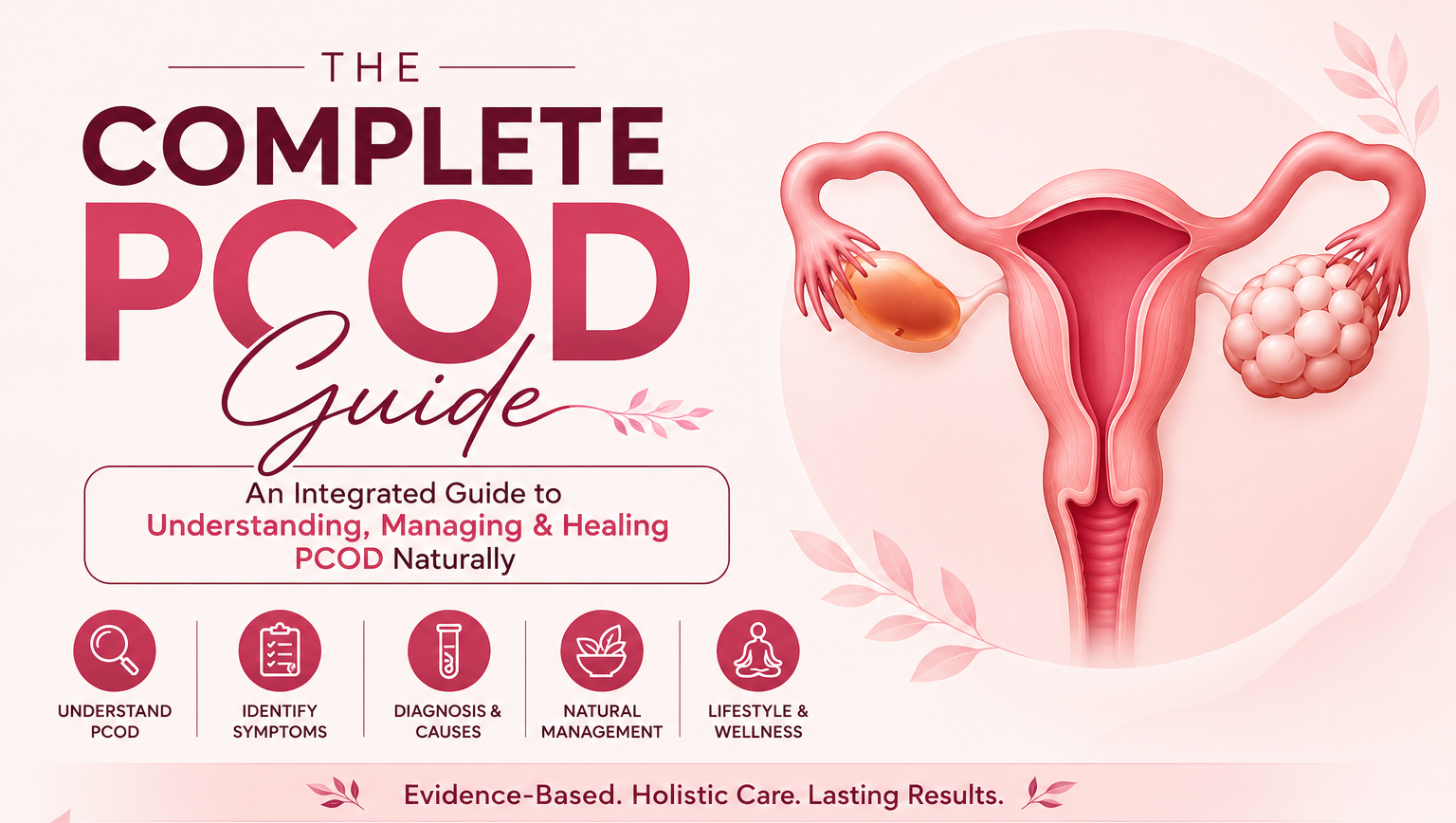
A Practical Guide to Understanding & Managing PCOD
Dear Friend,
If you’ve been diagnosed with PCOD (Polycystic Ovarian Disease) or are experiencing symptoms that make you wonder whether hormones are out of balance, this guide is for you.
Many women believe PCOD is only about irregular periods or ovarian cysts.
In reality, PCOD can affect multiple aspects of health, including menstrual cycles, metabolism, skin, hair, energy levels, emotional wellbeing, and fertility.
Every woman is different, so management should always be individualized.
This guide is designed to help you understand your body, recognize important signals, and adopt healthy habits that support hormonal wellbeing.
– Dr. Greeva Mankad
- What is PCOD?
PCOD is a condition in which hormonal imbalance affects how the ovaries function.
Depending on the individual, it may lead to:
- Irregular menstrual cycles
- Delayed ovulation
- Acne
- Hair fall
- Unwanted facial/body hair
- Weight changes
- Difficulty conceiving in some women
Not every woman experiences all of these symptoms.
- Common Body Signals
✔ Periods becoming irregular
✔ Increasing gap between cycles
✔ Acne that persists beyond teenage years
✔ Hair fall
✔ Facial hair growth
✔ Weight gain, especially around the abdomen
✔ Difficulty losing weight
✔ Fatigue
✔ Mood changes
✔ Sugar cravings
✔ Poor sleep
- What Can Contribute to PCOD?
Many factors can influence PCOD, including:
- Genetics
- Insulin resistance
- Weight changes
- Chronic stress
- Sleep disturbances
- Sedentary lifestyle
- Nutrition
- Hormonal changes
Often, more than one factor is involved.
- My Integrated Assessment
When I evaluate a woman with PCOD, I don’t look only at the ultrasound.
I also assess:
✔ Menstrual history
✔ Bleeding pattern
✔ Ovulation history
✔ Weight trend
✔ Hair & skin changes
✔ Sleep
✔ Stress
✔ Emotional wellbeing
✔ Digestion
✔ Lifestyle
✔ Medical history
✔ Family history
This helps create an individualized plan rather than a one-size-fits-all approach.
- Nutrition Principles
Aim to:
🥗 Include vegetables at most meals.
🍛 Choose whole grains instead of refined carbohydrates when possible.
🥜 Include healthy protein sources with meals.
🥑 Add healthy fats such as nuts and seeds in appropriate portions.
🍎 Prefer whole fruits over sugary drinks.
💧 Stay well hydrated.
Limit:
- Sugary beverages
- Ultra-processed snacks
- Frequent sweets
- Excess refined flour foods
There is no single “PCOD diet” that works for everyone.
- Movement Matters
Try to accumulate at least 150 minutes of moderate physical activity per week, unless your healthcare professional advises otherwise.
Examples:
✔ Brisk walking
✔ Cycling
✔ Swimming
✔ Strength training
✔ Yoga
Choose activities you enjoy so they are sustainable.
- Sleep & Stress
Hormonal health is closely linked with sleep and stress.
Helpful habits include:
✔ Consistent bedtime
✔ Morning sunlight exposure
✔ Relaxation techniques
✔ Mindfulness or meditation
✔ Journaling
✔ Time for hobbies and social connection
- When Should You Seek Medical Review?
Arrange a medical evaluation if you have:
- Periods absent for several months
- Very heavy bleeding
- Severe pelvic pain
- Difficulty conceiving
- Rapidly worsening facial hair
- Sudden unexplained symptoms
- Significant weight changes without explanation
- Track Your Progress
Every month, note:
□ Cycle length
□ Bleeding
□ Pain
□ Weight
□ Energy
□ Sleep
□ Exercise
□ Mood
□ Acne
□ Hair fall
□ Stress
This helps you notice patterns over time.
- My Message to Every Woman
PCOD is manageable, and many women experience meaningful improvement in symptoms with an individualized plan that may include lifestyle measures and, when appropriate, medical treatment.
The goal is not just to regularize periods—it is to improve your overall health and quality of life.
Quick Daily Checklist
✅ Drink enough water
✅ Eat balanced meals
✅ Include protein
✅ Move your body
✅ Sleep well
✅ Manage stress
✅ Track your cycles
✅ Avoid comparing your journey with others
Closing Note
Every woman’s hormonal journey is unique.
If your symptoms are affecting your health or quality of life, don’t ignore them. A proper assessment can help identify the underlying factors and guide an individualized management plan.
With warm regards,
Dr. Greeva Mankad
BHMS | MD (AM) | PGDPC | DNHE
Advik Homeopathy Clinic & Counselling Centre
📍 Ahmedabad, India
📞 +91 95125 13970
Click here to book your appointment.