
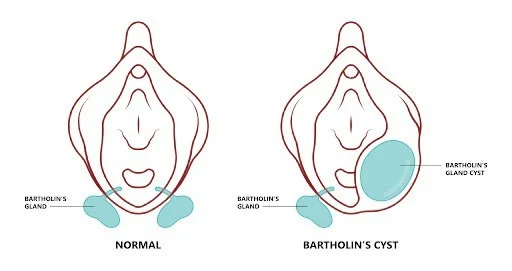
A Bartholin cyst develops when one of the Bartholin glands near the vaginal opening gets blocked, leading to fluid buildup. It may stay painless or turn into a painful abscess if infected. Social stigma and half-truths often delay proper care. While surgery is known, many women seek non-surgical options. Homoeopathy looks beyond the local swelling to the person’s tendency to cysts, hormonal shifts, and recurrence pattern.
Understanding myths versus facts helps you make informed choices early.
Myth 1: Bartholin cysts are caused by poor personal hygiene
Fact: Poor hygiene is not a direct cause. The cyst forms due to blockage of the gland’s duct from thick mucus, trauma, or swelling. Over-washing or harsh soaps can actually irritate the area and worsen symptoms.
Homoeopathy assesses the individual’s history and constitutional tendencies where there’s a pattern of cystic or glandular issues.
Myth 2: Hot sitz baths alone can cure any Bartholin cyst
Fact: Warm sitz baths help small cysts drain and ease pain, but they don’t correct recurrence tendency. If the duct remains blocked, cysts return.
In homoeopathy, specific remedies are considered to support drainage in abscesses and to help chronic, slow-to-heal cases. Local care supports, but constitutional treatment addresses the root.
Myth 3: If it’s not painful, you should ignore it
Fact: Painless cysts can enlarge or get infected suddenly. Monitoring is key.
In homoeopathy, painless but gradually hardening cysts are assessed based on glandular tendencies. Early case-taking prevents complications.
Myth 4: Bartholin cyst affects fertility
Fact: The gland has no role in conception. A cyst doesn’t cause infertility. However, severe recurrent abscesses and pelvic infection might impact reproductive health indirectly.
Homoeopathy considers menstrual history, discharge patterns, and pelvic sensitivity during evaluation.
Myth 5: Once you get it, you’ll keep getting it for life
Fact: Recurrence is common, but not inevitable. Addressing susceptibility reduces frequency.
Homoeopathic treatment focuses on totality: body temperature tendencies, food cravings, menstrual pattern, and mental state. History of skin issues or past trauma is also considered.
Myth 6: All discharges mean infection and need antibiotics
Fact: Clear mucoid discharge is normal gland secretion. Pus or foul discharge suggests infection.
Homoeopathy differentiates stages of inflammation and infection. Remedy choice depends on pain type, sensitivity, and nature of discharge.
Myth 7: Homoeopathy works too slowly for acute abscess
Fact: In acute, painful abscess, rightly chosen remedies can act quickly based on the stage — whether early with heat and throbbing pain, or later with burning and discoloration. Acute prescribing is different from chronic constitutional care. Timely follow-up is vital.
Myth: Bartholin cysts are the same as genital pimples or ingrown hairs
Truth: They form from a blocked gland deep under the skin, not a hair follicle. Pimples are surface-level; Bartholin cysts are deeper and near the vaginal opening.
Myth: Frequent washing prevents Bartholin cysts
Truth: Frequent washing disrupts normal vaginal flora and can cause irritation. It doesn’t prevent cysts and may increase infection risk.
Myth: If the cyst bursts on its own, you’re cured
Truth: It may relieve pain temporarily, but if the duct stays blocked or bacteria remain, it can refill or form an abscess. Follow-up with a doctor is still advised.
Myth: Birth control pills cause Bartholin cysts
Truth: No direct link. Hormonal changes can affect mucus thickness, but pills aren’t a proven cause. Blockage cause is often unknown.
If you want to know more about Bartholin cyst Click Here.
Conclusion
Bartholin cysts are surrounded by myths that create fear, shame, or false hope. The truth is most cysts are benign and manageable. Surgery, antibiotics, and homoeopathy each have a role depending on stage and tendency. Homoeopathy aims to reduce surgical need and recurrence by treating the individual, not just the cyst. Self-medication should be avoided because remedy selection depends on detailed case analysis. For any swelling that is hard, bleeding, or persists after menopause, consult a qualified physician first to rule out serious pathology. An integrated approach ensures safe, effective, and confident care.
If you want to know more about our integrated approach to Bartholin Cyst Treatment, Click Here.